
Self-Hosting AI Agents, RAG Pipelines, and Compact LLMs on Cloud VPS in 2026
An architectural breakdown of running private RAG knowledge bases with pgvector, quantized GGUF models, and internal AI agents directly on NVMe Cloud VPS.
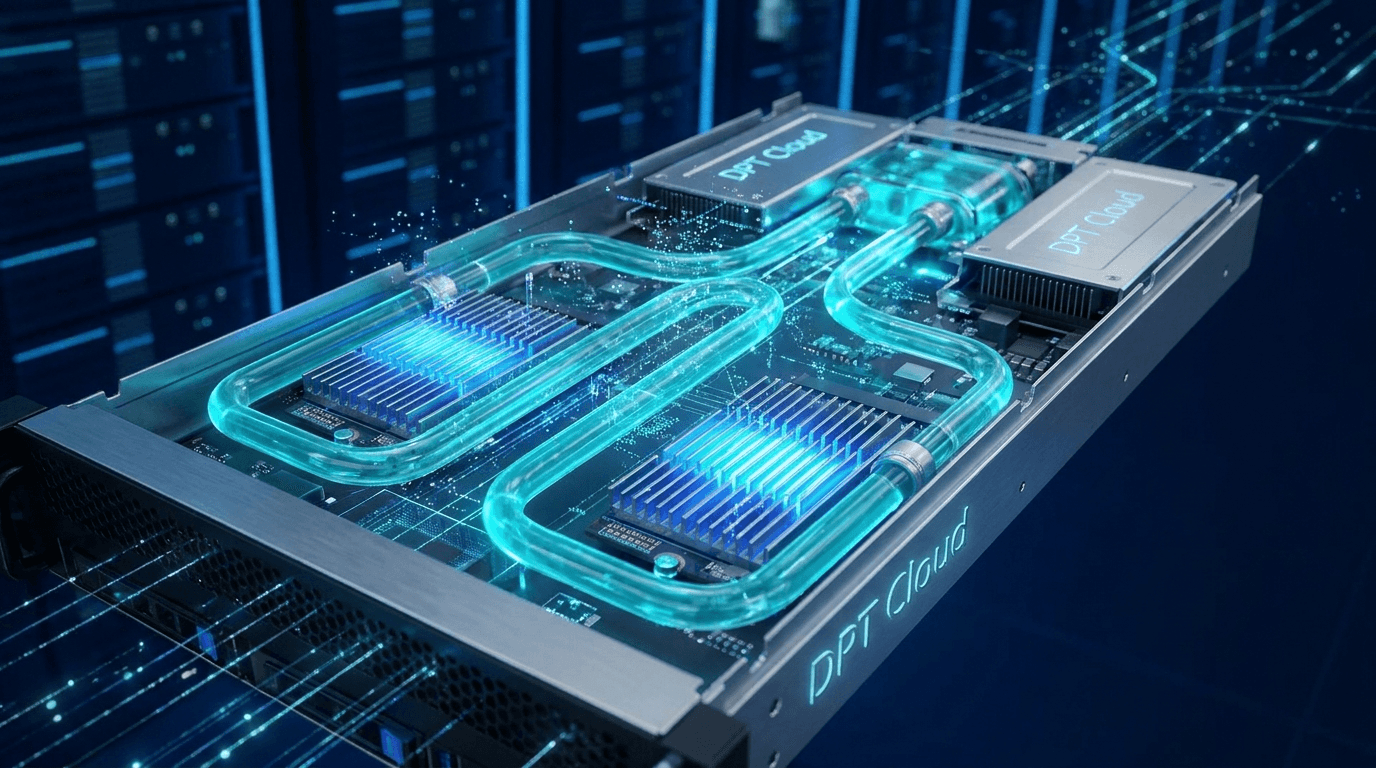
The year 2026 has accelerated an industry shift away from sending every enterprise prompt to external public AI APIs. Driven by efficient 3B–14B quantized Small Language Models (SLMs), mature in-database vector indexing via pgvector, and standardized agent tool interfaces, engineering teams are deploying private AI & RAG workloads directly on NVMe Cloud VPS and Dedicated Servers.
1. Why Teams Move RAG Workloads to Private Infrastructure
When building documentation assistants, customer-support copilots, or internal runbook search, shipping proprietary knowledge bases externally introduces three friction points: unpredictable token billing, cross-border latency spikes, and data-residency compliance gaps.
- Complete Data Ownership: Document chunks, embeddings, and conversation logs stay encrypted inside your dedicated storage volume.
- Predictable Monthly Cost: Fixed infrastructure billing replaces variable per-token usage spikes during traffic surges.
- Single-Digit Local Latency: Co-locating the API service, Redis cache, and vector database on the same low-latency tier keeps semantic retrieval below 15ms.
2. Sizing CPU, Memory Bandwidth, and NVMe Storage
A typical production RAG pipeline pairs an ONNX/CPU embedding service, a PostgreSQL 17 + pgvector index, and a quantized inference worker or hybrid API router. You do not always need expensive datacenter GPUs when combining hybrid BM25 + semantic retrieval with compact 4-bit quantized models.
| Layer | Typical Workload | Recommended Baseline |
|---|---|---|
| Vector Store (pgvector HNSW) | 100k – 1M embedded chunks | 4 vCPU, 8–16GB RAM, Gen4 NVMe RAID-10 |
| Embedding Worker (ONNX) | Continuous ingestion & query vectors | 4–8 vCPU (AVX2/AVX-512), 8GB RAM |
| Quantized LLM (Q4_K_M 3B–8B) | Summarization & structured JSON routing | 8+ high-frequency cores or Dedicated Server |
Engineering Tip: HNSW index builds and filtered vector queries stress random read/write IOPS and memory allocation. Pairing generous maintenance_work_mem with PCIe Gen4 NVMe storage dramatically cuts re-indexing pauses.
3. Hardened Docker Compose Blueprint for RAG + pgvector
Isolate vector storage and model runtimes inside an internal Docker bridge network so only your authenticated application gateway handles public TLS traffic:
services:
  vectordb:
    image: pgvector/pgvector:pg17
    restart: unless-stopped
    environment:
      POSTGRES_DB: knowledge_base
      POSTGRES_USER: rag_app
      POSTGRES_PASSWORD: ${DB_PASSWORD}
    command:
      - "postgres"
      - "-c"
      - "shared_buffers=2GB"
      - "-c"
      - "maintenance_work_mem=512MB"
      - "-c"
      - "effective_cache_size=6GB"
    volumes:
      - pgvector_data:/var/lib/postgresql/data
    networks:
      - ai_private_net

  ollama_cpu:
    image: ollama/ollama:latest
    restart: unless-stopped
    environment:
      - OLLAMA_NUM_PARALLEL=2
      - OLLAMA_KEEP_ALIVE=30m
    volumes:
      - ollama_models:/root/.ollama
    networks:
      - ai_private_net

networks:
  ai_private_net:
    driver: bridge
    internal: true

volumes:
  pgvector_data:
  ollama_models:
4. Locking Down AI Endpoints in Production
Never expose raw inference ports like 11434 or database ports like 5432 directly to the public internet. Front your orchestrator behind Nginx with strict rate limiting, request payload caps, and per-service tokens. Need dedicated compute for multi-tenant workloads? Explore DPTCloud Cloud VPS clusters and Enterprise Dedicated Servers.
Ready to deploy on PCIe Gen4 NVMe VPS & 10Gbps Uplinks?
Provision servers in under 60 seconds with edge Anti-DDoS protection and 99.99% SLA uptime.